Pillar
How to Choose the Best Digital Marketing Agency in the USA.

Introduction: The Stakes Have Never Been Higher
Every day, over 8.5 billion searches are made on Google alone. Your potential customers — the ones who need exactly what you sell — are out there searching right now. The question is, are they finding you, or are they finding your competitors?
For small business owners, startup founders, and professional service providers across the USA, choosing the right digital marketing agency can be the single most consequential business decision you make this year. A great agency accelerates growth, builds brand authority, and generates measurable ROI. A poor one burns your budget, wastes months of momentum, and leaves you worse off than when you started.
The problem? The market is flooded. There are over 60,000 marketing agencies operating in the United States, all claiming to be the "best." Bold promises are easy to make. Results are not.
This guide exists to cut through the noise. Whether you're a local dentist in Chicago, an e-commerce founder in Austin, or a law firm in New York looking to scale, this article gives you an honest, expert framework for identifying, evaluating, and choosing the best digital marketing agency in the USA for your specific business needs in 2025.
What Does a "Best-in-Class" Digital Marketing Agency Actually Do?
Before you can choose the right agency, you need to understand what separates genuinely excellent agencies from the vast majority of mediocre ones. This distinction matters enormously—and it goes far deeper than a slick website and a portfolio of logos.
Core Services That Drive Real Business Growth
The best digital marketing agencies don't just offer a menu of services—they build integrated strategies. In 2025, the most effective agencies offer a combination of:
- Technical SEO: Ensuring your website is fast, crawlable, and structured so Google can index and rank every important page.
- Local SEO: Optimizing your Google Business Profile, local citations, and location-based content so nearby customers find you first.
- Content Marketing: Creating authoritative, search-optimized content that ranks on Google, generates backlinks, and builds trust with your audience.
- Link Building: Earning high-quality backlinks from credible websites to boost domain authority and organic search rankings.
- Pay-Per-Click (PPC) Advertising: Running targeted paid campaigns on Google, Bing, and social platforms to drive immediate, measurable traffic.
- Web Design: Building conversion-optimized websites that not only look great but actively turn visitors into leads and customers.
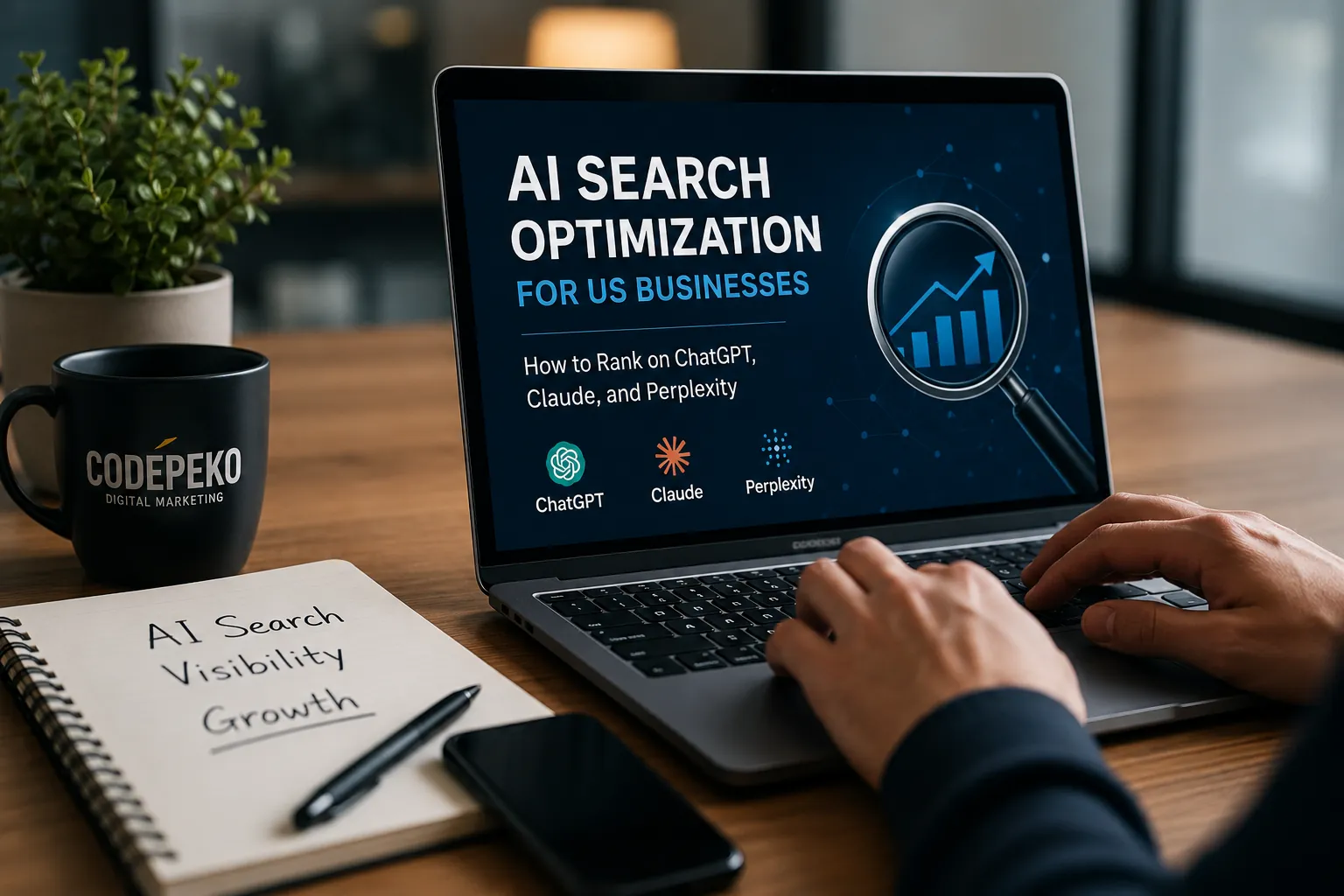
What's changed dramatically in 2025 is the addition of AI search optimization. The best agencies now also optimize for visibility in ChatGPT, Claude, Perplexity, and Google AI Overviews—platforms where millions of users now discover businesses and services without clicking a single traditional search result.
The Shift to AI-Driven Search Visibility
According to data from SparkToro and Datos, zero-click searches now account for nearly 60% of all Google searches in the USA. Meanwhile, AI-powered answer engines like Perplexity and ChatGPT are rapidly gaining adoption among educated, high-intent users — exactly the demographic most small businesses want to reach.
An agency that only understands traditional SEO is already behind. The agencies worth hiring in 2025 understand how to structure content, earn citations, and build authority so your business appears not just in blue links but also in AI-generated answers, featured snippets, and Google AI overviews.
When you're evaluating agencies, ask directly: "What are you doing to optimize for AI search platforms?" If they look confused or give a vague answer, that's your answer.
Strategy Versus Execution: Understanding the Difference
Many agencies are strong executors—they'll run your ads, post your blogs, and send your emails. Far fewer are strategic partners who align marketing activity with business objectives. The best agencies start with questions, not proposals:
- What does your ideal customer look like?
- What is your current cost of customer acquisition?
- What's your average order value or lifetime customer value?
- Where are your competitors winning that you're not?
If an agency jumps straight to pitching packages before asking these questions, walk away. Strategy must come before tactics, always.
Red Flags to Watch for When Choosing a Digital Marketing Agency
One of the most valuable things this guide can do is save you from the costly mistake of hiring the wrong agency. After working with hundreds of businesses, the patterns become clear. Here are the warning signs that should make you pause or walk away entirely.
Guaranteed Rankings and Unrealistic Promises
No legitimate agency can guarantee you'll rank #1 on Google. Google itself has stated this publicly in its own guidelines. If an agency promises specific rankings — especially within suspiciously short timeframes like "30 days" — this is a major red flag.
What they can promise is a clear process, transparent reporting, and a track record of delivering measurable improvements for businesses like yours. Ask them to show you real case studies with real data, not testimonials alone.
Similarly, be wary of agencies that promise massive traffic increases without discussing conversion optimization. One thousand extra monthly visitors mean nothing if none of them convert into inquiries or sales.
Lock-In Contracts Without Performance Clauses
Some agencies lock clients into 12-month or 24-month contracts with no performance benchmarks and no exit clauses. This structure protects the agency, not you.
A confident, reputable agency will be comfortable with shorter initial commitments — say, three to six months — while results are established, with the expectation that strong performance earns a long-term relationship. Ask specifically:
- What happens if agreed KPIs aren't met?
- Is there a performance review clause?
- Who owns the assets created (website, content, ad accounts) if you part ways?
The answers to these questions reveal a great deal about how an agency views its relationship with clients.
Lack of Transparency in Reporting
If an agency sends you a PDF full of vanity metrics—impressions, social media likes, and raw traffic numbers—without connecting them to business outcomes like leads, revenue, and cost per acquisition, that's a problem.
The best agencies report on what actually matters to your business. They use tools like Google Analytics 4, Google Search Console, and call tracking software to demonstrate real-world impact. Monthly reporting should always include:
- Organic keyword rankings and trajectory
- Organic traffic compared to prior periods
- Leads or conversions generated from each channel
- Cost per lead for paid campaigns
- Return on ad spend (ROAS) where applicable
Transparency isn't just a nice-to-have—it's the foundation of a productive agency-client relationship.
How to Evaluate Digital Marketing Agencies: The Complete Framework
Now that you know what to look for and what to avoid, here is a structured framework for evaluating any agency you're considering. Use this as your due diligence checklist.
Step 1 — Define Your Goals and Budget Before You Start
The single biggest mistake businesses make when searching for an agency is approaching the process without clearly defined goals. "We want more leads" isn't a goal. ""We want to generate 50 qualified inbound inquiries per month at a cost per acquisition below $200 within six months" is a goal.
Before you contact a single agency, document:
- Primary objective: Lead generation, e-commerce revenue, brand awareness, or local foot traffic?
- Key performance indicators (KPIs): What does success look like in numbers?
- Realistic budget range: The average US SMB spends between $2,500 and $12,000 per month on digital marketing services, depending on scope.
- Timeframe: Are you looking for quick wins from PPC, long-term organic growth from SEO, or both?
Having this clarity makes every conversation with an agency more productive and gives you a basis for comparing proposals meaningfully.
Step 2 — Assess Industry Experience and Relevant Case Studies
An agency with deep experience in your industry will dramatically shorten the learning curve and deliver faster results. But industry experience alone isn't sufficient—you need to see documented evidence of results.
When reviewing case studies, look for:
- Businesses of comparable size to yours
- Similar competitive landscapes
- Specific metrics, not vague claims
- Clear before-and-after comparisons
Don't be shy about asking to speak directly with a current or former client. A reputable agency will have happy clients willing to vouch for them. If an agency is reluctant to provide references, treat it as a significant warning sign.
Step 3 — Evaluate Technical Capability and Tool Stack
The quality of an agency's technical capability tells you a great deal about the sophistication of its work. During your evaluation, ask which tools and platforms they use. Industry-standard tools include:
- SEO: Ahrefs, Semrush, Screaming Frog, Google Search Console
- PPC: Google Ads, Microsoft Advertising, platform native analytics
- Analytics: Google Analytics 4, Looker Studio, call tracking platforms
- Content: Clearscope, Surfer SEO, or equivalent content optimisation tools
- Web: Experience with major CMS platforms (WordPress, Shopify, Webflow) and Core Web Vitals optimisation
An agency using best-in-class tools demonstrates a commitment to precision, data-driven decision-making, and professional standards. One relying entirely on free tools or proprietary platforms with no third-party validation is harder to trust.
Local SEO vs. National SEO: Choosing the Right Focus for Your Business
One of the most important distinctions in digital marketing strategy is the difference between local and national SEO—and many businesses hire an agency without fully understanding which they actually need.
What Local SEO Delivers and Who Needs It
Local SEO is the discipline of optimizing your online presence so that your business appears prominently when people in your geographic area search for your products or services. If you are a dentist in Dallas, a plumber in Phoenix, or a law firm in Los Angeles, local SEO is likely your highest-priority marketing channel.
Key components of effective local SEO include:
- Google Business Profile optimization: Ensuring your GBP is fully completed, regularly updated, and optimized with relevant keywords, photos, services, and posts.
- Local citations: Consistent NAP (Name, Address, Phone) data across directories like Yelp, Yellow Pages, and industry-specific platforms.
- Local link building: Earning backlinks from local news sites, business associations, and community organizations.
- Review management: Actively generating and responding to Google reviews — businesses with more than 50 reviews and a 4.5+ average rating consistently outperform competitors in local search.
- Location-specific content: Service area pages and location-focused blog content targeting neighborhood or city-specific search terms.
According to Google's own research, 76% of people who search for something nearby visit a business within one day. For local businesses, this is not a channel to neglect.
When National SEO and Content Marketing Take Priority
If you serve customers across multiple states or nationwide — as many e-commerce businesses, SaaS companies, and professional service firms do — national SEO and content marketing become the dominant strategy.
National SEO requires:
- Topical authority: Publishing comprehensive, interconnected content that establishes your brand as an expert in your niche.
- Link acquisition at scale: Earning authoritative backlinks from national publications, industry media, and high-DA websites.
- Technical SEO excellence: Ensuring large websites remain crawlable, load quickly, and maintain strong Core Web Vitals scores.
- Conversion rate optimization (CRO): Ensuring high-traffic pages convert visitors effectively through strong UX and clear calls to action.
The best agencies are equipped to handle both local and national strategies, and they'll recommend the right balance based on your business model and objectives — not based on which service has the highest margin for them.
The Role of PPC in Supporting Your SEO Strategy
While SEO delivers sustainable, compounding returns over time, it typically takes three to six months before meaningful organic results emerge. This is where PPC advertising plays a critical bridging role.
Well-run PPC campaigns on Google Ads or Microsoft Advertising can:
- Generate immediate, qualified traffic while SEO gains traction
- Provide valuable keyword and conversion data that informs your SEO strategy
- Target specific products, services, or promotions with precision
- Retarget website visitors who didn't convert on their first visit
The best agencies treat PPC and SEO as complementary, not competing. They use PPC data to identify the highest-converting keywords and feed those insights back into organic content strategy.
> Want to know how your current digital marketing is performing? Claim your free audit from CodePeko today and receive a detailed breakdown of exactly where you're winning and where you're leaving money on the table.
What the Best Digital Marketing Agencies Have in Common in 2025
Across industries, geographies, and business sizes, the very best digital marketing agencies share a set of defining characteristics. Understanding these commonalities gives you a clear benchmark against which to measure every agency you consider.
A Genuine Focus on ROI, Not Activity
Mediocre agencies report on activity — posts published, emails sent, ads run. Elite agencies report on outcomes — revenue generated, leads produced, cost per acquisition achieved, and return on investment delivered.
This distinction is cultural, not just operational. Ask any agency you're considering: "How do you define success for a client like me?" If the answer centers on deliverables rather than outcomes, that tells you everything.
The best agencies build custom dashboards that connect marketing activity directly to business results, and they hold themselves accountable to those numbers in every monthly review meeting.
Strong Communication and Proactive Account Management
Client-agency relationships fail most often not because of poor results, but because of poor communication. The best agencies assign dedicated account managers who genuinely understand your business, proactively bring ideas to the table, and communicate transparently when something isn't working.
In your initial conversations, pay attention to responsiveness. If it takes days to get replies during the pitch process, imagine what communication will be like once you're signed. How quickly do they respond? Are their responses thoughtful and specific, or generic and templated?
- Ask specifically:
- Who will be my day-to-day contact?
- How often will we have strategic review meetings?
- How do you communicate when a campaign isn't performing?
Continuous Learning and Adaptation to Algorithm Changes
Digital marketing in 2025 is not the same discipline it was in 2022. Google has released multiple major algorithm updates — including the Helpful Content System and the March 2024 Core Update — that have fundamentally changed what it means to rank well. Meta, Google, and Microsoft regularly update their ad platforms. AI is reshaping search behaviour every month.
The best agencies invest continuously in education, attend industry conferences, hold internal knowledge-sharing sessions, and update their methodologies accordingly. Ask any prospective agency: "What was the most significant change in digital marketing over the past twelve months, and how have you adapted your approach?"
Their answer will tell you whether you're speaking with genuine experts or people running five-year-old playbooks.
Questions to Ask Before Signing with Any Agency
This section distils years of agency evaluation experience into the specific questions that reveal the truth about any agency's capabilities, culture, and client-centricity.
Due Diligence Questions That Separate the Best from the Rest
Ask these questions in your initial discovery call or proposal review:
- "Can you walk me through a specific campaign you ran for a business similar to mine—from strategy through to results?" This separates genuine case studies from fabricated ones and reveals strategic thinking.
- "What does your onboarding process look like, and what do you need from us in the first 30 days?" Great agencies have a structured onboarding. Vague answers suggest a lack of process.
- "How do you handle it when a strategy isn't working?" The best agencies have clear pivot processes. Poor agencies either blame the client or stick rigidly to the original plan.
- "Who exactly will be working on our account, and what is their experience?" Some agencies pitch senior talent in proposals and deliver junior staff in execution. Know who's doing the work.
- "What is your client retention rate?" A high-quality agency should retain clients at a rate above 80%. Anything lower warrants a probing follow-up conversation.
- "How do you stay current with Google algorithm changes and developments in AI search?" This question immediately separates forward-thinking agencies from those operating on outdated knowledge.
Pricing Structures: What's Normal and What's a Warning Sign
Digital marketing agency pricing in the USA typically follows several models:
- Monthly retainer: $1,500–$15,000/month depending on service scope and market competitiveness. This is the most common model for ongoing SEO, content, and social media management.
- Project-based: Flat fee for defined projects like a website build, content audit, or one-time SEO overhaul.
- Performance-based: Agency earns a percentage of revenue or leads generated. Rare but increasingly common for e-commerce clients.
- Hourly consulting: $100–$300/hour for senior strategists and specialists.
Beware of agencies pricing significantly below market rates. Quality digital marketing requires skilled human labor, premium tools (which cost thousands of dollars per month in licensing), and continuous strategic input. Suspiciously cheap agencies often deliver suspiciously poor results.